"I have no idea why it sold for quite so much."
That's Compass agent Nina Hatvany, quoted by the San Francisco Standard, talking about a house she used to own. Hatvany sold the six-bedroom Cow Hollow house at 2512 Union Street in the late 1980s. This spring, the family who bought it from her sold it again, and even a longtime District 7 agent couldn't fully account for the number.
Here's what happened. On May 8, 2026, 2512 Union Street closed for $15 million against an original asking price of roughly $7.95 million. That's 88.7% over ask, according to a Compass representative cited by the San Francisco Standard, the widest gap between asking and closing price recorded for any San Francisco home above $5 million in at least 26 years. Only one sale has ever beaten it: a Presidio Heights property that closed for more than double its ask back in 2000.
For years, the working assumption among San Francisco agents was that this kind of frenzy belonged to the entry-level market, where dozens of buyers chase a handful of houses on the west side. Above $5 million, the story went, buyers had the advisors and the patience to negotiate, sale prices tracked appraised value, and a listing agent could set expectations and mean it. The 2512 Union sale broke that story in public. It wasn't alone. Weeks earlier, a home at 212 Spruce Street in Presidio Heights sold for $8.2 million, 86.6% over its ask.
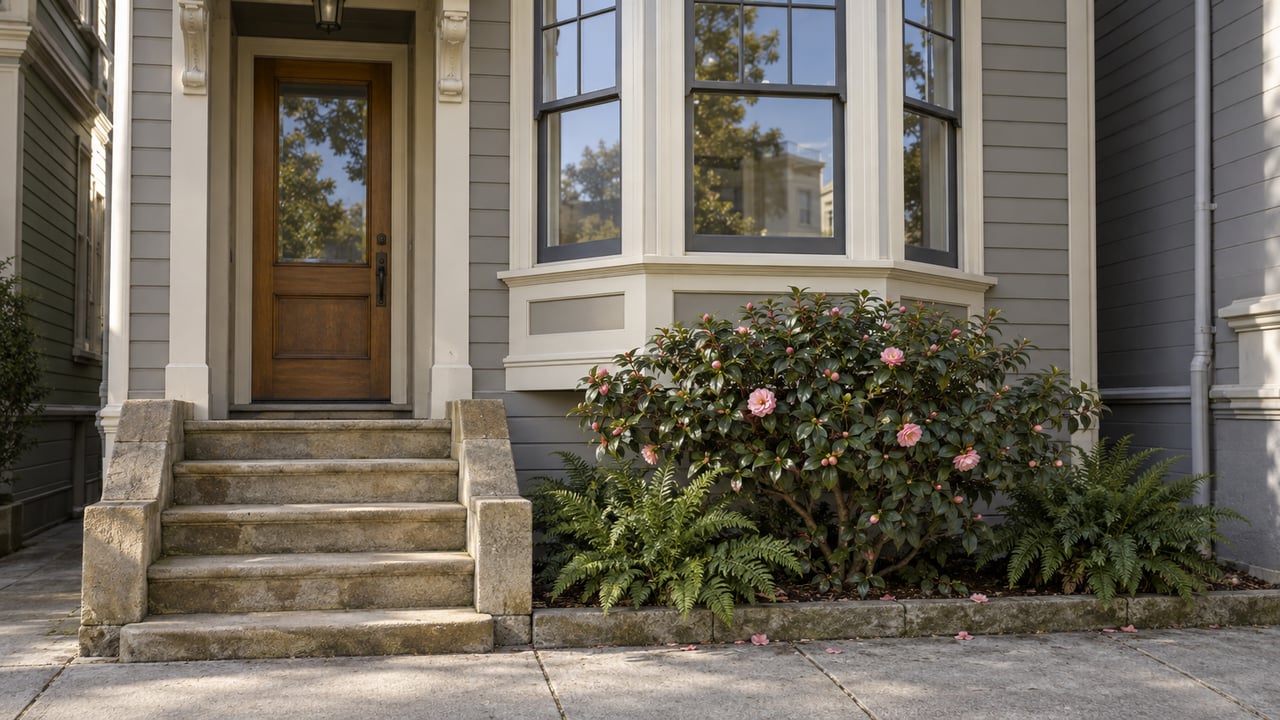
Neither of these was a fixer that needed vision to see its potential. 2512 Union is a 5,725-square-foot house with bay views stretching to the Golden Gate Bridge, on what listing materials called one of Cow Hollow's most desirable blocks. It went under contract within two weeks of hitting the market.
The Pattern Behind the Headline
The two sales are dramatic on their own, but they sit on top of a broader shift. In April 2026, 85% of San Francisco homes sold above asking, and the city logged 26 home sales above $5 million that month, including four above $10 million, according to Compass data reported alongside the Cow Hollow story by The Real Deal. All three figures, the share selling over asking, the count above $5 million, and the count above $10 million, were new records for the city.
Zoom into the neighborhoods where the biggest sales cluster and the pattern holds. Closed sales recorded on the San Francisco MLS for the twelve months through mid-July 2026 put Cow Hollow's median house sale at $7.89 million and Pacific Heights at $6.85 million. Pacific Heights alone accounted for four of the city's five largest sales in that stretch. The fifth went to a Russian Hill house at 2626 Larkin Street that closed at $24 million, right at its asking price, no theater involved.
That last detail is worth sitting with. Not every trophy sale becomes a spectacle. Some close quietly at the number the seller asked for. Both patterns exist at the same time, in the same handful of blocks, sometimes in the same season.
| District 7 Subdistrict | Median Sale Price (12 months through mid-July 2026) | What Stands Out |
|---|---|---|
| Cow Hollow | $7.89 million | Site of 2512 Union Street's record overbid |
| Pacific Heights | $6.85 million | Four of the city's five largest sales in that 12-month stretch |
| Presidio Heights | Not part of the same subdistrict report | Site of the 212 Spruce Street sale, and of the only sale ever recorded that beat 2512 Union's overbid percentage |
Zooming out one more level, District 7 as a whole, which covers Pacific Heights, Presidio Heights, the Marina, and Cow Hollow, saw its median house price climb to $6 million in 2025, up 20% year over year, the fastest increase of any district in the city that year according to Compass data reported by The Real Deal.
Why Buyers With Money Bid Like Everyone Else
The old assumption wasn't wrong because wealthy buyers suddenly became irrational. It was wrong because it mistook patience for a personality trait rather than a function of supply. When there are five houses like yours on the market and forty buyers who can write a check for any of them without a loan contingency, the math stops rewarding whoever waits the longest.
Compare that to the very top of downtown's condo market, where the old story still mostly holds. A unit at 488 Folsom Street closed at $9.845 million this year, under its asking price, which is how the top of that market still negotiates. A high-floor condo has substitutes: the building next door, the tower after that. A Cow Hollow house built in 1898 with a bay view to the Golden Gate Bridge does not. Scarcity, not the size of the buyer's bank account, decides whether a sale negotiates or auctions.
Hatvany's second comment gets closer to the actual mechanism than her first. Buyers at this price point, she told the Standard, are often people who don't like competition and have the means to end it immediately. That's a different motive than chasing a good deal. A buyer looking for value walks away once the price passes a number a spreadsheet can defend. A buyer trying to close off competition keeps going until the other side quits, because losing the house is the real cost, not the extra million dollars.
That shift shows up in how these buyers pay, too. Compass agent Michelle Harris told the Chronicle, in reporting picked up by The Real Deal, that "it's pretty jaw-dropping how many buyers we have coming to us who are all-cash, ready to go." When a buyer doesn't need an appraisal to clear, the ceiling on a bid is whatever they're willing to spend, not whatever a bank will lend against.
The Detail Sellers Shouldn't Skip
One more piece of the 2512 Union story is easy to miss and worth noticing. When reporters asked the listing agent, Neal Ward of Compass, for details about the sale, he declined, citing a nondisclosure agreement. At the top of San Francisco's market, some of the most useful comps for pricing a listing are private. Buyers and sellers negotiating a $7 million or $12 million home right now may be working from an incomplete picture, because the last sale that would tell them what the market actually bears was never fully disclosed.
That has a practical consequence for both sides of the table. A seller who prices strictly against visible comps may be underpricing against a true market that a recent private sale has already reset. A buyer who assumes the last public sale on the block represents the ceiling may be wrong by a wide margin.
What This Means If You're Selling Above $5 Million
- A conservative asking price isn't a mistake right now. It functions closer to an invitation. 2512 Union asked $7.95 million and closed at $15 million because the number on the sign pulled every qualified buyer into the room at once.
- Presentation still decides who shows up, but at this price point, scarcity decides how far they'll go once they're there. A one-of-a-kind lot, view corridor, or floor plan configuration matters more than incremental upgrades.
- Confidentiality clauses are becoming more common at closing. Ask your agent directly how comparable sales in your subdistrict were actually priced, not just what's visible in the public record.
What This Means If You're Buying at This Level
Budgeting against the last comp you can find on a portal listing won't protect you here. The 2512 Union sale alone reset expectations for any similarly positioned Cow Hollow house that hits the market this year. Buyers who want a real shot at a home in this tier should plan for an all-cash or highly liquid offer, a pre-inspection completed before the offer goes in rather than after, and a firm number for how much they're willing to pay specifically to avoid re-entering the search. That last number, more than any spreadsheet, is what decided 2512 Union Street.
A Few Direct Questions
Does this mean every San Francisco luxury listing will get bid up this aggressively? No. The Russian Hill sale on Larkin Street closed at full price the same season. Overbids cluster around homes with a genuinely rare feature, a specific lot, view, or layout with no close substitute currently on the market.
Is this specific to 2026, or has the market always worked this way? The scale is new. Compass data cited by the San Francisco Standard describes the 2512 Union overbid percentage as the widest in at least 26 years for a San Francisco home above $5 million. The underlying dynamic, that scarce trophy inventory can outrun even patient, well-funded buyers, has always existed at the margins. This year it moved to the center of the story.
If you're weighing a sale or a purchase above $5 million in Pacific Heights, Cow Hollow, Presidio Heights, or elsewhere in San Francisco's high end, the comps you can see on a portal are rarely the whole picture. Aviva Kamler can walk you through what the private terms behind recent sales actually suggest about your specific block, and help you price or bid with the real market in view. Request a Personalized Home Valuation to start that conversation.