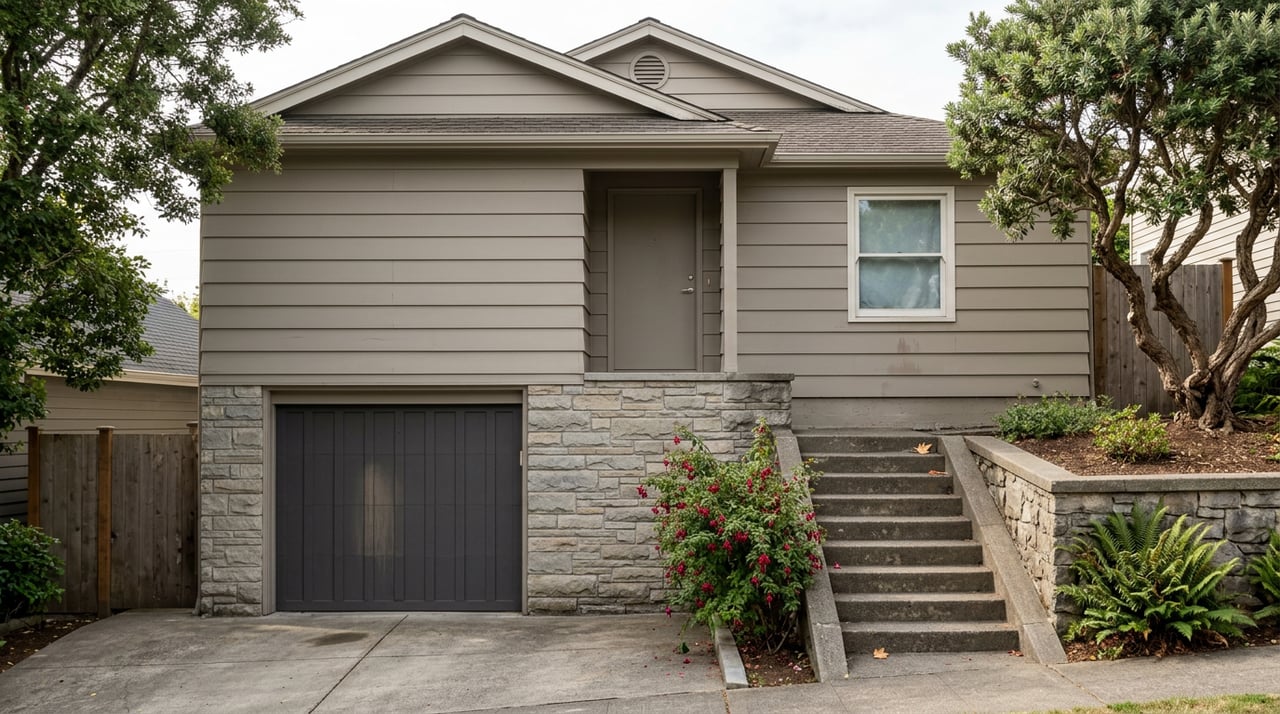
Ralph Wedge wanted to add an accessory dwelling unit on his Novato property. The permit took nearly four years to clear. When it did, the approved sewer tie-in came with a bill of about $71,000, a number he shared publicly with county officials during a community meeting on Marin's septic rules this spring. His story wasn't presented as an outlier. It was presented as a pattern.
That pattern matters to anyone buying or selling in West Marin right now, and not because Ralph Wedge's project involved a home sale. It didn't. His story matters because of what it reveals about the system underneath every West Marin property: the septic system doesn't get scrutinized when a house changes hands. It gets scrutinized when someone pulls a permit, or when a neighbor complains. A sale, by itself, triggers neither.
That gap between "sold" and "inspected" is the thing worth understanding before you write an offer on a home in Point Reyes Station, Inverness, Olema, Nicasio, or Marshall, or before you list one.
The Trigger That Isn't There
Marin County officials have said plainly that septic system inspections are currently triggered by permits or complaints, not by the transaction itself. At a countywide meeting earlier this year, residents described that system as lax and confusing. One Mill Valley homeowner near Muir Woods told county staff that a neighbor's leaking system had been an unresolved problem for at least a decade, a direct illustration of what happens when enforcement waits for someone to notice and speak up rather than checking on a fixed schedule.
For a buyer, this means the absence of a red flag on a disclosure form tells you less than you'd think. A septic system can sit untested for years, through multiple owners, simply because no one filed for a permit and no neighbor filed a complaint. The county's own website acknowledges the pattern from the other direction, noting that many property owners first encounter septic regulations during a property sale, a home renovation, or when planning an ADU. In other words: the sale is often the moment the question finally gets asked, not the moment it gets required.
Forty Years of Rules That Assumed More Water Than People Actually Use
Since the 1980s, Marin has required septic systems to be built with 200 percent redundancy, meaning two full leach fields rather than a primary field and a reserve area, which is the standard in most of California. County officials have only recently scaled that back, now allowing homeowners to set aside land for a reserve field without actually constructing it.
The redundancy rule wasn't the only place the math ran hot. County design standards have long assumed 150 gallons of wastewater per bedroom per day, with just a 30 percent reduction credited for water-saving fixtures. A 2020 study found that actual household wastewater use consistently fell below those design assumptions, and it recommended easing the leach field requirement and allowing newer treatment technologies. Eight West Marin homeowners and two community sites tested the changes as pilot projects, and the county found that many existing systems could be retained with only minor adjustments rather than full replacement.
That's the mechanism behind Point Reyes Light's reporting that a septic review can trigger repairs or replacements running upwards of $100,000, on a system built to standards that overshot the actual demand for decades. One person involved in the county's review put the sloping-lot problem bluntly to the paper: "Those old rules drive up costs on sloping sites, of which Marin has plenty."
There's a second, quieter number that compounds this. The county estimates that as much as 75 percent of construction work in unincorporated Marin happens without a building permit, with septic scrutiny cited as a major reason homeowners avoid pulling one. Every one of those unpermitted projects is a system that was never tested against even the old, stricter standard. That's not a small footnote for a buyer. It means a home's septic history may contain long stretches where nothing was checked at all, permit or no permit.
The Fall Vote That Resets the Baseline
Marin has been trying to finish this update since 2014. Staffing changes at both the county and the Regional Water Quality Control Board, along with shifts in state law, kept stalling it. The county has now hired outside technical and community engagement consultants specifically to get Phase I of the Local Agency Management Program, or LAMP, adopted by the end of 2026. That approval requires sign-off from both the San Francisco Bay Regional Water Quality Control Board and Marin's Board of Supervisors.
County staff told community members this spring that they hope to wrap up outreach by June and bring the updated rules to the Board of Supervisors for a vote in the fall of this year. If that timeline slips and the county doesn't get an approved LAMP in place, the fallback isn't the status quo. It's the state's stricter, one-size-fits-all onsite wastewater policy, adopted in 2023, applied without the local flexibility Marin has been trying to build in.
The county already moved on one piece ahead of the bigger vote. Beginning last fall, homeowners doing work that doesn't add square footage, about 85 percent of permit applications, gained the ability to self-certify that their project won't affect the septic system, skipping a formal review that used to apply automatically. It's a preview of the direction the fuller LAMP is expected to take: less automatic scrutiny for small projects, more flexibility for engineered and alternative systems, and design assumptions that better match how West Marin households actually use water.
Why This Isn't Just a Permitting Curiosity
Septic capacity has been the difference between land that can be developed and land that can't. In Point Reyes Station, an old Coast Guard site sat empty for a decade after the Coast Guard left in 2014, and county officials say the holdup was straightforward: the site never had a proper septic system, only holding tanks that were pumped daily, which isn't a workable long-term solution. The county now has to carve out a small parcel just to build the septic infrastructure needed before it can convert the buildings into housing, part of a project whose cost has climbed past $50 million with completion targeted for 2028.
Along Tomales Bay, the pressure runs the other direction: aging systems threatening water quality rather than blocking new construction. Bolinas Beach has previously posted advisories after septic leaks reaching the coastal bluff pushed E. coli levels past health standards, and the Regional Water Quality Control Board has authority to require corrective action wherever onsite systems discharge into surface water. Marshall, home to Hog Island Oyster Company's operations and the historic Marshall General Store, sits in exactly this kind of coastal zone, where the county manages a shared septic system rather than leaving it to individual owners. Stinson Beach, by contrast, holds its own separate permit with the Regional Board. None of West Marin is regulated identically, which is part of why a countywide rewrite has taken over a decade to get this far.
What to Do Differently Between Now and the Vote
- If you're buying, ask for Marin County's own residential septic inspection form, the one built specifically for real estate sales, rather than assuming a clean disclosure means a tested system. Inspection isn't automatic at sale, so someone has to request it.
- Ask when the tank was last pumped and whether any permit or remodel touched the system in the past several years. Under the current trigger structure, that's usually the only reason a system would have been reviewed at all.
- If the property sits near Tomales Bay, Bolinas Lagoon, or another coastal waterway, ask specifically about proximity to surface water and any history of Regional Board involvement.
- If you're selling before the fall vote, a pre-listing septic evaluation removes uncertainty for buyers and tells you which standard your system will be measured against while that standard still exists in its current form.
- If you're planning a remodel that won't add square footage, ask whether the self-certification option applies. It wasn't available before last fall, so longtime owners may not know it exists.
A Few Practical Questions
Does selling a home in Marin automatically trigger a septic inspection? No. Inspections are currently triggered by permits or complaints, not by the sale itself. A buyer who wants certainty needs to request an inspection using the county's real estate sales form rather than assume one has already happened.
Will the rules the county adopts this year apply to systems already in the ground? The changes govern how repairs, replacements, and new permits are evaluated going forward. An existing system built under the old standards isn't automatically re-inspected. It resurfaces the next time a permit application or a complaint brings the county back to that property.
What if a system has never been inspected at all? That's common enough that the county cites it as a driver of its own reform effort, given how much unincorporated Marin construction has historically happened without a permit. Absence of a violation on record isn't the same as a passing grade. It often just means no one has looked yet.
West Marin's housing stock and its wastewater infrastructure were built for a different set of assumptions than the ones the county is writing today. Knowing where a property's septic system stands, and where the rules governing it are headed before your escrow closes, is the kind of detail that separates a smooth transaction from a costly surprise six months in.
If you're weighing a purchase or a sale anywhere from Inverness to Nicasio to the San Geronimo Valley, Aviva Kamler tracks these local shifts as closely as the comps. Request a Personalized Home Valuation to talk through what this year's septic changes could mean for your specific property and timeline.