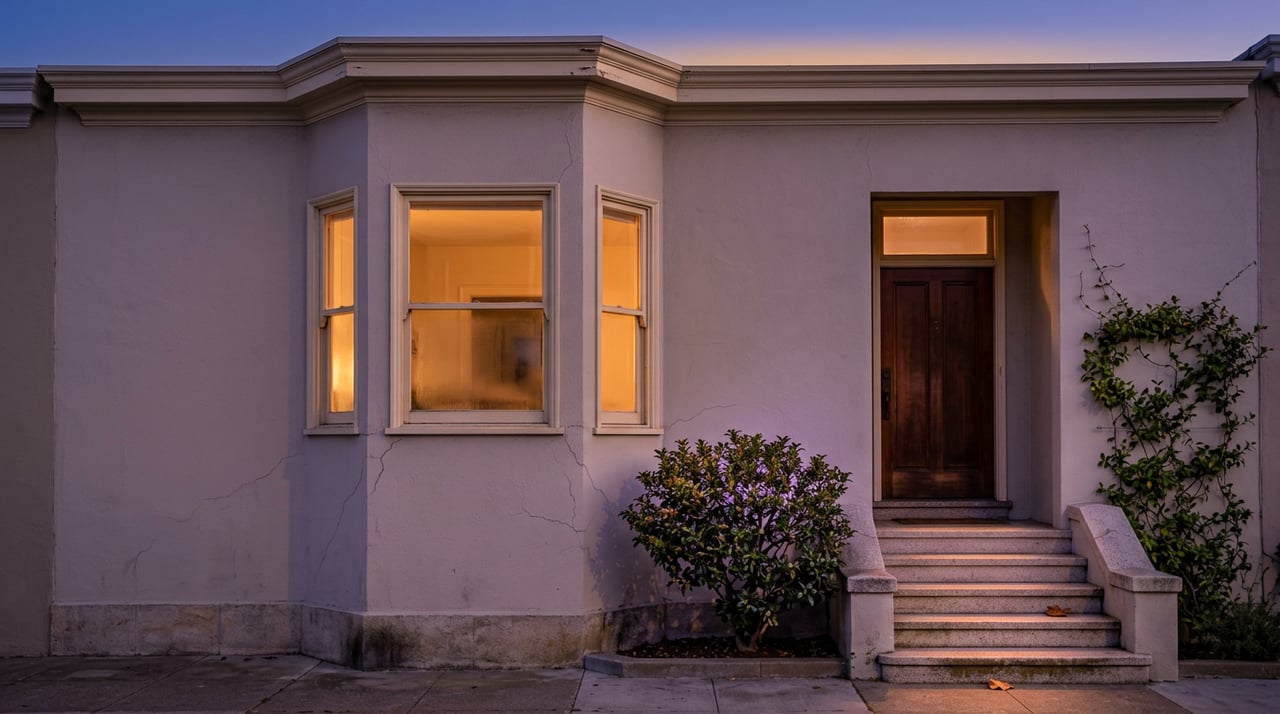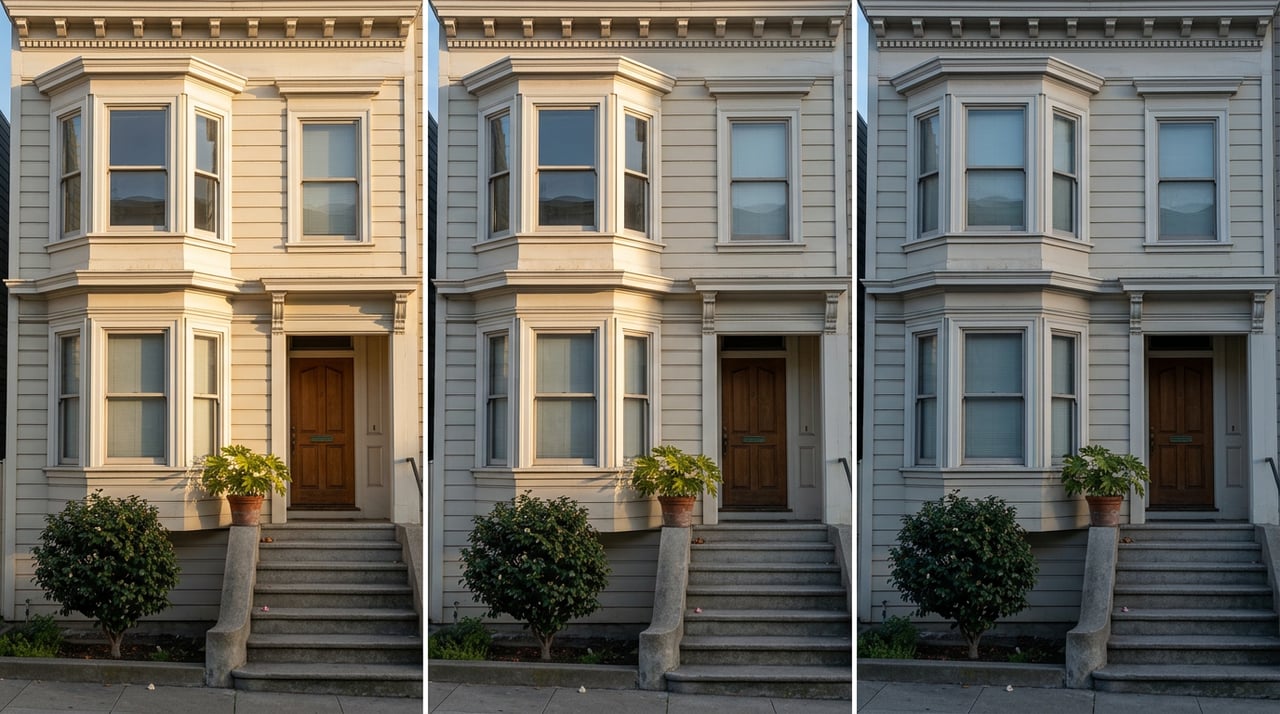
A buyer touring a three-unit Victorian in Noe Valley this spring found two nearly identical listings in the same building. Same square footage, same bay windows, same freshly refinished floors. One was priced as a condo. The other, one flight up, was priced as a tenancy in common, or TIC, and listed for roughly 8 percent less. The buyer had read enough forum posts to expect a much bigger gap. She wasn't wrong to expect it. She was working from numbers that are a few years out of date.
That gap, and the reasons it has shrunk, is the thing worth understanding before you write an offer on either unit.
What a TIC Actually Is
A TIC is not a lesser version of a condo. It's a different legal structure entirely. Instead of owning a separately mapped unit with its own parcel number, TIC buyers own an undivided percentage of an entire building, paired with a private agreement that gives them exclusive rights to occupy one unit. The building carries a single property tax bill under one parcel number, and co-owners are collectively responsible for the whole amount, even though each owner's mortgage is now entirely their own.
That last part matters more than most buyers realize. TICs used to be financed with a single group loan covering the whole building, which meant one owner's missed payment could put everyone's home at risk. That structure is largely gone. Today, fractional financing lets each co-owner get an individual loan secured only by their percentage interest and their right to occupy their unit. If a neighbor defaults, a lender can pursue that owner's share without touching yours. The property tax bill remains the one place your finances are still tied to the people down the hall.
The Two Numbers That Used to Justify the Whole Trade
Buyers have historically accepted two costs in exchange for a TIC discount: a higher interest rate and a smaller lender pool. Both of those costs are shrinking in 2026, and that changes the math.
On price, the discount has clearly been shrinking, though current sources don't fully agree on where it sits today. Some 2026 write-ups still quote a 10 to 20 percent gap between a TIC and a comparable condo, and older accounts of the market cite discounts as steep as 20 to 30 percent. The most recently published local read, a San Francisco buyer's agent's market update from July 2026, puts the current discount closer to 5 to 10 percent, and ties that compression directly to how much easier TIC financing has become. That lower range is the one worth budgeting around unless your own building's comps say otherwise, because it's the most recent account and it's explicitly tied to the financing improvements described below.
On financing, the story is similar. Some lenders and loan brokers still quote fractional TIC rates running half a point to a full point above a comparable condo mortgage. That same July 2026 market update reports the effective gap has narrowed to roughly a quarter of a percentage point for well-qualified buyers, with 30-year fixed products now available where adjustable-rate mortgages used to be the only option. The honest answer is that the rate you're quoted depends heavily on which of the handful of active lenders you talk to. Sterling Bank & Trust, Redwood Credit Union, and Bank of Marin are among the small group of institutions still originating these loans, and terms vary enough between them that shopping more than one is worth the extra week it adds to your timeline.
Here's the version of the math that most buyers are still running versus the range the most current local reporting suggests:
| Often-repeated figure | Most recent 2026 estimate | |
|---|---|---|
| Price discount vs. comparable condo | 15–30% | roughly 5–10% |
| Financing rate premium | up to 2 points higher | roughly a quarter point for well-qualified buyers, though some lenders still quote 0.5–1 point |
| Typical down payment | 20–25% | 20–25%, largely unchanged |
| Path to condo conversion | Annual lottery, unpredictable | Lottery still suspended; two-unit bypass remains the only reliable fast track |
Run the numbers on a $750,000 fractional loan and a half-point rate premium costs a buyer about $312 more per month, or roughly $112,000 in additional interest over 30 years. Against a 20 percent discount, that extra cost is easy to absorb. Against a discount closer to 5 or 10 percent, the math gets tight enough that it's worth running the actual numbers with your own lender before you assume the TIC is the better deal.
Why the Conversion Story Stopped Doing the Heavy Lifting
For years, the pitch on a TIC wasn't just the discount. It was the discount plus the possibility of converting to a condo down the road and capturing the price gap as pure upside. That pitch depended on San Francisco's condominium conversion lottery, and the lottery has been effectively frozen since a 2013 moratorium limited new condo conversions for buildings with three or more units. The city's Expedited Conversion Program, meant to clear a backlog of eligible TICs, went on hiatus in 2020 with a return projected for 2024, then 2025, then 2026. As of this summer, that return still hasn't happened.
There is one exception, and it's the reason two-unit buildings still trade differently than larger ones. A duplex TIC can bypass the lottery entirely under what's known as the two-unit fast track, provided the building meets a specific set of conditions:
- Both units have been owner-occupied for at least one continuous year
- Each owner holds at least a 25 percent interest in the property during that entire period
- The building has a clean eviction history, with no history of evicting elderly, disabled, or catastrophically ill tenants
If you're looking at a two-unit TIC specifically because you want a realistic conversion path, confirm the building actually meets all three conditions before you assume the fast track applies. Buildings with three or more units don't have this option right now. If you're buying one of those on the theory that conversion is coming eventually, treat that as a long-term maybe, not a plan.
Where the Discount Still Shows Up
TIC activity concentrates in specific pockets of the city where condo prices run high enough that the discount still buys meaningful ground: Noe Valley and Eureka Valley, the Mission and Mission Dolores, the Marina, and Nob Hill and Telegraph Hill. From January through May 2026, 120 TICs sold across San Francisco at a median price of $1.2 million, and the 93 of those in buildings with three or more units sold at an average of 7.5 percent over their list prices, evidence that buyer competition for these units hasn't softened even as the discount itself has narrowed. Only one TIC sale in that window crossed the $2 million mark: a two-level penthouse at 430 Greenwich in Telegraph Hill, with three bedrooms, three bathrooms, two-car parking, a private elevator, and sweeping bay views. That sale is the outlier that proves the rule. Most of the activity, and most of the value, sits in the $1 million to $1.5 million range where the gap to a comparable condo, now closer to $1.19 million on a median basis as of the first quarter of 2026, still means something concrete.
What This Means If You're Comparing a TIC to a Condo
The discount hasn't disappeared. It's just no longer large enough to carry the decision by itself. A TIC still makes sense if it gets you into a building or a block you couldn't otherwise afford, and if you're comfortable living with a shared tax bill and a legal agreement that governs how decisions get made with your co-owners. It makes less sense if you're buying primarily on the hope of an eventual conversion windfall in a building with three or more units, because that path is currently closed with no announced reopening date.
Before you make an offer on either side of that Noe Valley building, ask your agent and your lender to run the actual numbers on the specific unit: the current rate quote from at least two fractional lenders, the building's TIC agreement and whether it's still operating on a group loan or has moved to fractional financing, and, if conversion matters to you, whether the building would even qualify for the two-unit bypass. Those answers will tell you more than any national article about San Francisco TICs, including this one.
A Few Direct Questions
Can I rent out a TIC unit? Yes, but it's subject to the San Francisco Rent Ordinance. Because a TIC unit isn't a separately mapped parcel, it doesn't qualify for the Costa-Hawkins exemption that lets condo owners set market rent for new tenants. The San Francisco Tenants Union publishes a plain-language overview of how rent control interacts with TIC ownership if you're weighing this before you buy.
What happens if a co-owner stops paying their share of the property tax? Because the building carries one master tax bill, a shortfall from one owner creates pressure on the others until it's resolved. This is one of the few places a TIC's shared liability still shows up, even under fractional financing.
Is the condo conversion lottery coming back? Not on any confirmed timeline as of mid-2026. The Expedited Conversion Program has been on hiatus since 2020 with repeated projected restart dates that have come and gone. The two-unit bypass remains the only conversion path buyers can count on right now.
Whether you're weighing a TIC against a condo in the same building or trying to figure out what your current home is actually worth in this market, the numbers that matter are specific to the address, not the citywide average. Aviva Kamler can walk through the real math on a specific listing or run a personalized valuation on what you already own. Request a Personalized Home Valuation to start with your own numbers instead of someone else's.